

















The semester is becoming more stressful at Franklin High School with ACT and many other exams approaching quickly. Students are putting in study time, completing homework, participating in after-school activities, working part-time jobs, and maintaining social relationships while attempting to keep good grades. In order to study, students are pulling all-nighters and relying on energy drinks; “I’ll catch up later” seems to be the catch phrase of many students. However, what impact will this have on one thing which can potentially affect test performance?
…
Sleep.
For many students, the first thing to be given up in the middle of an overly stressful academic season is sleep. Many will tell you that staying up late feels productive: perhaps it’s reading another chapter, maybe it’s practicing for yet another test, or perhaps it’s scrolling through TikTok.
Science, however, tells a different story. Research has shown the amount of sleep teens receive on a daily basis can have a direct impact on their ability to retain information, maintain focus, and solve problems. In fact, a recent study demonstrated that adolescents (another word for teenager) who were able to go to bed at an earlier hour received a greater quality of restful sleep and displayed significantly sharper brain function than those who remained awake later into the evening hours, regardless of whether they received less overall sleep. What this essentially means is that it’s not just the quantity of your sleep, but also the timing of it that matters.
The process of learning involves many different parts of a student’s body, including their brain while they sleep. While students sleep, their brain will organize and store the new knowledge that they have gained from the previous day. If students do not get enough sleep, then even though they read the new material, their brain does not have time to fully understand and remember it.
The lack of sleep can also cause many negative effects such as reduced attention span, slower processing of thoughts and problems, and the inability to recall information. All of these factors can lead to a serious decline in a student’s ability to perform well on tests, which is very important during testing seasons like the ACT, where both focus and memory are needed for success.
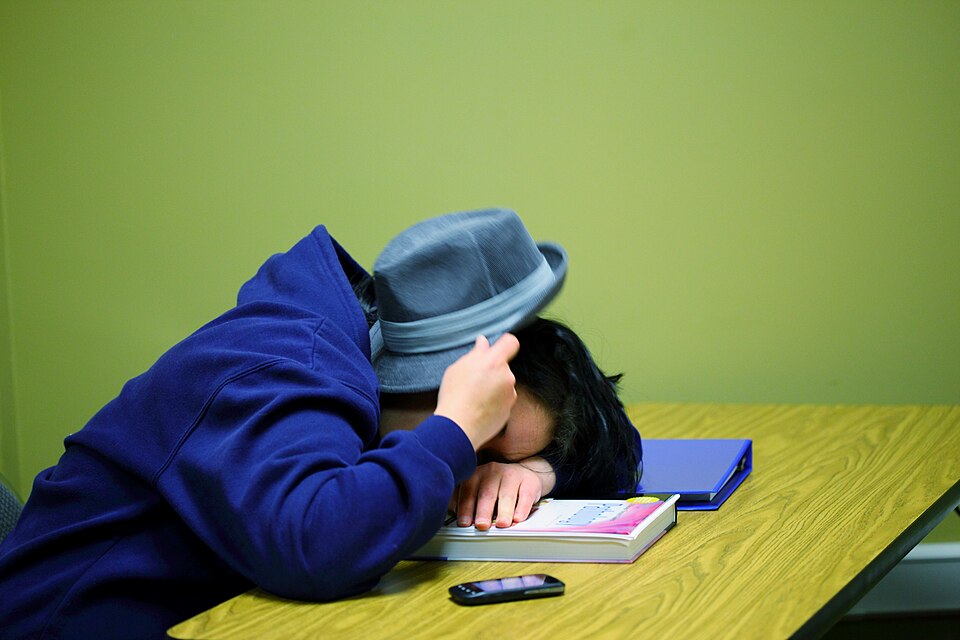
Sleep is something each student at FHS feels differently about; however, there is one thing all of the students agreed on and it was that lack of sleep has an effect on everything. A number of students stated that when they didn’t receive enough sleep, staying awake in school became a huge task. Their head would begin to nod, their eyes would start to shut, and their ability to pay attention would disappear. Several other students felt much more stressed, as well as mentally fuzzy, even though many claimed to be “okay.”
While a few students thought that their grade point average wasn’t significantly impacted by their sleep schedule, the majority of students felt tired, less motivated, and slower in responding in class discussions and/or lessons.
Testing week is coming up and sleep time is going to become even shorter. Many students have stated that they will be receiving less sleep than usual during ACT or exam weeks. Students will often choose late night study sessions over getting some rest. When students finish packets, read their notes again, squeeze in some last minute studying, etc., they usually sacrifice sleep for extra study time. Therefore, we see exhausted students who can’t focus and are completely burned out from school.
Teachers at FHS know that sleep deprivation is immediately apparent in their students. Many teachers described that tired students struggle to stay awake and lose focus quickly during exams, while students who come well-rested to class are more engaged, participate in discussions, think critically, and ask thoughtful questions. Teachers point out that sleep gives students’ brains the energy they need to think on a deep level of understanding, while lack of sleep leaves students at the surface level.
According to teachers, many students do not fully realize how important sleep really is. Teachers frequently hear students talking about getting only 2-5 hours of sleep before a major test without realizing the damage that will be done by it. The majority of the teachers that were interviewed pointed out that sleep is essential for forming memories; without it, the brain can’t store what was learned during the day. Other teachers compared sleep deprivation to driving impaired, and said that if we consider lack of sleep un-safe for driving, it’s just as bad in an academic setting.
One message was present in every interview with teachers: sleep is just as important as studying. Studying allows students to know information; sleep allows them to function clearly and efficiently with that information. Teachers point out that even if a student doesn’t know every answer, being well-rested allows them to use logic, context clues, and critical thinking to work through difficult questions. Without sleep, even well-prepared students will struggle.
While poor sleep habits affect student performance in school, they have a profound impact on students’ mental and physical well-being as well. The National Sleep Foundation reports that students with chronic sleep deprivation are at higher risk for experiencing anxiety, feeling overwhelmed, and being “burned-out.” Due to the fatigue associated with missing sleep, many students rely on caffeine to help them stay awake during the school day. However, as previously stated, consuming caffeine earlier in the day will make it difficult to fall asleep later at night, which creates a vicious cycle of exhaustion. Furthermore, when students do not get enough sleep due to stress from academic pressures during high-stress periods of the school year (e.g., state tests), going to school becomes both more stressful and less manageable.
However, changing behavior is easier than people think. There are some simple actions that can create significant differences in how rested students feel and perform in class. For example, teen experts agree that teenagers should try to obtain 8-10 hours of sleep each night, establish regular sleep patterns (i.e., go to bed and wake up at the same times), and minimize screen time before bed. Additionally, studies show that obtaining an additional 30 minutes of sleep per night can significantly improve concentration, memory, and energy levels. Therefore, for students studying for ACTs or other major exams, simply getting enough sleep is one of the best study strategies available.