



















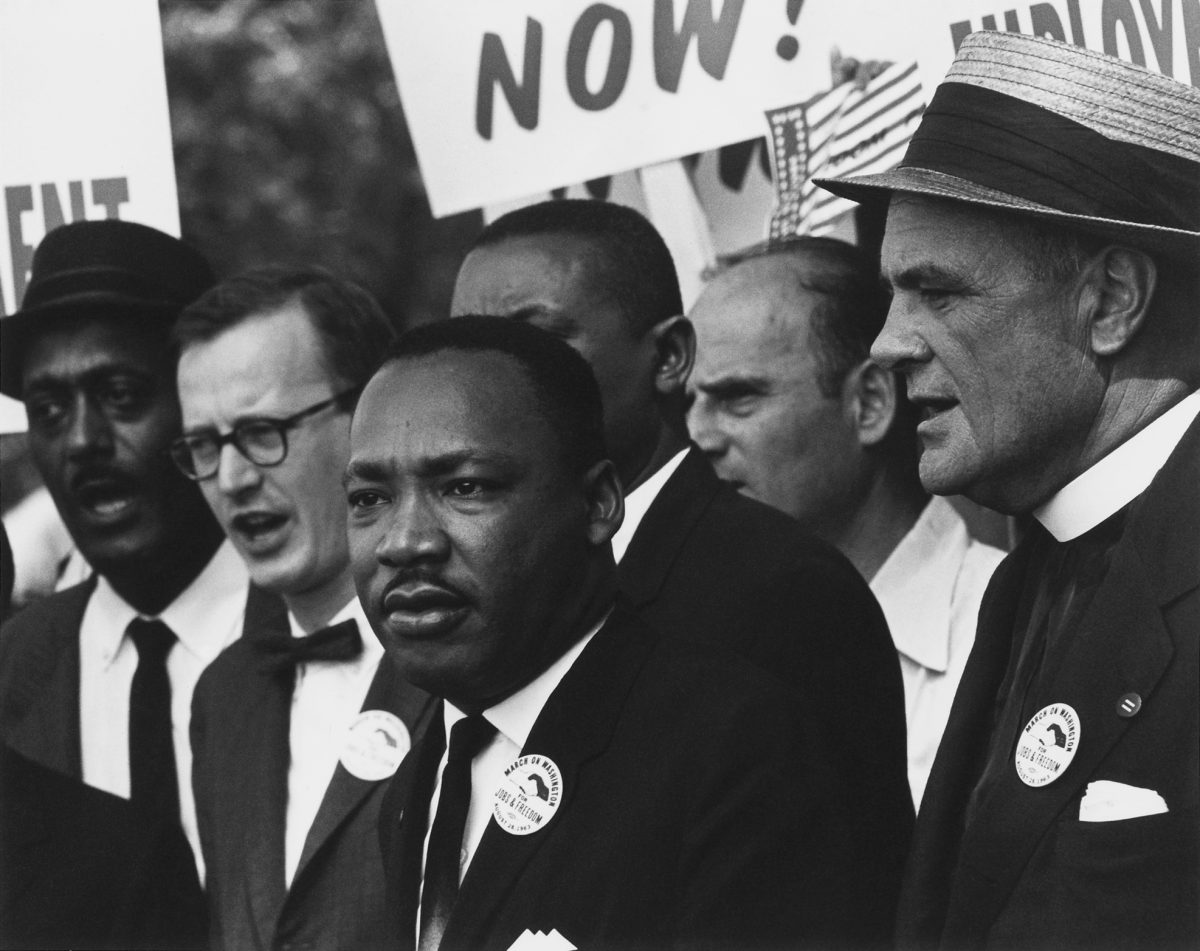
We celebrated MLK day on the third Monday of January, but who was MLK?
Martin Luther King Jr. was a leading figure in the civil rights movement from 1955 until his death in 1968. Throughout his time as an activist, he called for the end of racial segregation and discrimination. King orchestrated and oversaw the Montgomery Bus Boycott of 1955 after the arrest of Rosa Parks on December 1, 1955. After that, he was elected to the council of the Southern Christian Leadership Council, an African-American civil rights group, for the role of president. Through this role he led the Albany Movement of 1961. While unsuccessful, this was a beneficial lesson on tactics for the rest of the movement, and led to later success.
Later on in 1963, Dr. King organized nonviolent protests in Birmingham, Alabama and was jailed on April 12, 1963 for defying a court injunction that banned anti-segregation demonstrations. During his time in jail, he wrote “Letter from Birmingham Jail,” an open letter and essay advocating for civil disobedience, which is the idea of intentionally not following a law if the legislation is based on immoral principles. Furthermore, he stated that the people have a moral responsibility to break unjust laws and take direct action rather than wait for justice that may not come. Many famous quotes of Dr. King’s come from this letter, with “Injustice anywhere is a threat to justice everywhere,” becoming one of his most known.
After his release on April 20, 1963, he led the Washington March for Jobs and Freedom on August 28, 1963. This was an activist march for equal civil and economic rights for African-Americans. During the march, Dr. King stood in front of a crowd estimated at 200,000 to 300,000 people, and delivered his most famous speech: ‘I Have a Dream.’ In his address, he pointed out the inaccuracy of the idea of freedom in the United States and advocated for desegregation and the destruction of ‘legalized racism,’ which is the idea of one group having more rights than another based on race.
Martin Luther King Jr.’s actions in the civil rights movement led to some of the greatest legislation towards civil rights and equality within the United States. Thanks to many of his initiatives, the Civil Rights Acts of 1964 & 1965 were passed, pushing equality not just for African-Americans but for all races.